


Even with good care, houseplants can fall ill or be infested by pests. Those who know the most common causes of disease and recognize typical signs early can react quickly and specifically to save their plants. The sooner you start treating your plant, the better the chances of a full recovery.
Causes of Plant Diseases
It is not always possible to completely prevent diseases in houseplants. Nevertheless, it is helpful to know what can cause them. Knowing the most common causes allows you to specifically improve the conditions for your plants and significantly reduce the risk of disease.
Through contaminated soil or plants
New soil or newly purchased plants can introduce pests and pathogens into the home, often without being immediately apparent. Even plants that are already infected at the time of purchase can quickly infect other plants and trigger diseases in your houseplants. The quality of the soil used and the condition of newly added plants therefore play an important role.
Solution: To minimize the risk, it is advisable to use high-quality soil. New plants should be carefully inspected, showered, and repotted immediately after purchase if necessary, before bringing them into your home.
Unsuitable location conditions
Houseplants need optimal conditions to thrive. Poor conditions, such as an incorrect location, insufficient light, or air that is too dry due to heating, can permanently weaken the plant and increase its susceptibility to diseases and pests. Through careful site selection and adapted care, the well-being of plants can be significantly improved, and diseases can be prevented from the outset.
Solution: Find out whether your plant prefers shade or direct sun and place it accordingly. For plants that require higher humidity, it also helps to regularly spray the leaves with water.
Common care mistakes
Excessive watering or, conversely, a lack of water and nutrients can also increase a plant's susceptibility. A common example is waterlogging, which occurs when the roots are continuously in overly wet substrate. This can lead to root rot and seriously damage the plant.
Solution: Check the soil before watering and only water the plant when the top layer of soil is already dry. Additionally, you can occasionally add some fertilizer to the watering can to adequately supply the plant with nutrients.
Common Damage Patterns in Houseplants
The health of houseplants can be affected by various diseases. Early detection of symptoms is crucial to implement targeted treatment strategies and protect the plants.
White coatings on the leaves
If you suddenly discover white coatings on the leaves and stems of your plants, it could be powdery mildew. This is especially true if other symptoms such as leaf deformation and yellow spots occur.
Powdery mildew, caused by fungi of the genus Erysiphales, is a widespread plant disease that frequently affects houseplants. The characteristic white, powdery coatings impair photosynthesis and lead to leaf deformities. As soon as you discover the fungal infestation on your plant, you should act quickly to prevent further spread. There are various treatment options. For a mild infestation, a self-mixed solution of water and baking soda can help contain the fungus. The use of beneficial insects such as ladybugs can also reduce the spread. If the infection is already more advanced, specialized fungicidal sprays from specialized stores are an effective option.
Oily spots on the underside of the leaves
Downy mildew, caused by fungal infections of the genus Peronosporaceae, manifests as oily spots on the underside of the leaves. The infestation leads to wilting and discolored leaves and impairs overall plant growth.
This fungal infection spreads in high humidity and low temperatures. So try to improve air circulation by ensuring adequate ventilation and reducing humidity. The application of fungicides can also stop the spread of downy mildew. In addition, spraying with copper sprays is considered a preventive measure.
Black deposits on the leaves
Black, sooty deposits on the leaves usually indicate the fungal disease sooty mold. These deposits are often a byproduct of honeydew, a substance secreted by aphids. Sooty mold impairs photosynthesis and can hinder plant growth.
Carefully wipe off the black deposits with a damp cloth and ensure good air circulation around your houseplant to prevent the long-term formation of honeydew and thus sooty mold. In cases of severe infestations, you can also use special fungicides.
Gray mold formation on leaves and stems
If your houseplant shows gray mold on its leaves and stems, combined with wilting or rotting plant parts and an unpleasant odor, it is likely gray mold. This fungus primarily appears in humid conditions and particularly likes to attack already dead plant parts.
Cut off affected plant parts generously and dispose of them to prevent further spread. Also, pay attention to targeted watering so that the humidity around your houseplant does not become too high. In case of severe infestation, special fungicides against Botrytis cinerea can be an effective support.
Limp plant and foul odor
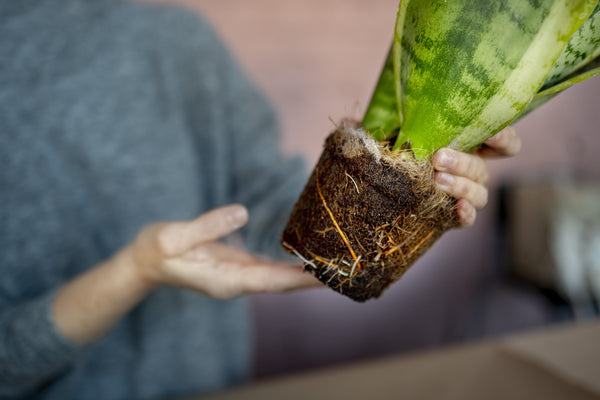
If your houseplant remains in water for too long (waterlogging), this can lead to root rot. The disease is often recognizable by yellowing and limp-looking leaves. In addition, a foul odor from the pot can indicate already rotting roots.
To save your plant, repot it into fresh soil and remove all affected roots. Then reduce watering and only water your plant when the top layer of soil is already dry to prevent renewed waterlogging. In case of advanced infestation, special fungicides against root rot can also be used.
Enclosed spots on the leaves
If dark spots with yellow margins appear on the leaves of your houseplant, combined with general leaf discoloration, it is likely leaf spot disease. This is caused by fungi such as Alternaria spp.
Remove affected leaves as early as possible to prevent further spread to healthy plant parts. Also, ensure better ventilation around your houseplant, as reduced humidity inhibits the spread of the fungus. In advanced cases, the use of suitable fungicides can also be helpful.
Yellow discolored leaves
The so-called chlorosis is characterized by yellowing of the leaves between the veins. It indicates a lack of chlorophyll. A pH value outside the optimal range can promote this disease.
To treat chlorosis, iron or nutrient fertilizers can be added to compensate for the deficiency. Controlling and adjusting the soil pH to the optimal level also supports nutrient absorption. Regular fertilization with a balanced nutrient mix helps improve the plant's health.
Stunted leaves
Stunted leaves are also a common symptom of damage in houseplants. In many cases, they are caused by aphids. Aphids are sucking insects that can be found on leaves and shoots. Since they suck out plant sap and thus deprive the plant of important nutrients, stunted leaves and deformed plant parts can result. They also leave behind honeydew, a sticky coating that can serve as a base for other pests and fungal diseases.
Encouraging natural predators like ladybugs can help biologically control aphids. Home remedies like a mild soap solution also work as a natural insecticide by killing aphids. Applied to affected areas, neem oil is also an effective insecticide against aphids.
Treatment of diseases in houseplants
As soon as you discover an infestation or disease on your houseplant, you should act as quickly as possible to prevent further damage and save the plant. The appropriate treatment depends on the type of disease and the extent of the infestation. Basically, two approaches are available: For a mild infestation, natural methods such as the use of beneficial insects or proven home remedies are often sufficient. In the case of a more severe infestation, chemical agents such as fungicides or insecticides may be necessary to effectively protect the plant.
As a general rule, prevention is better than cure. The best protection against diseases and pests is good basic care. Those who offer their houseplants optimal conditions, give them the right location, and pay attention to adapted watering significantly reduce the risk of infestation. Regular inspection of the plants helps to detect abnormalities early and react in time before a problem spreads.


