

6 products
-
Syngonium Red Spot Tricolor
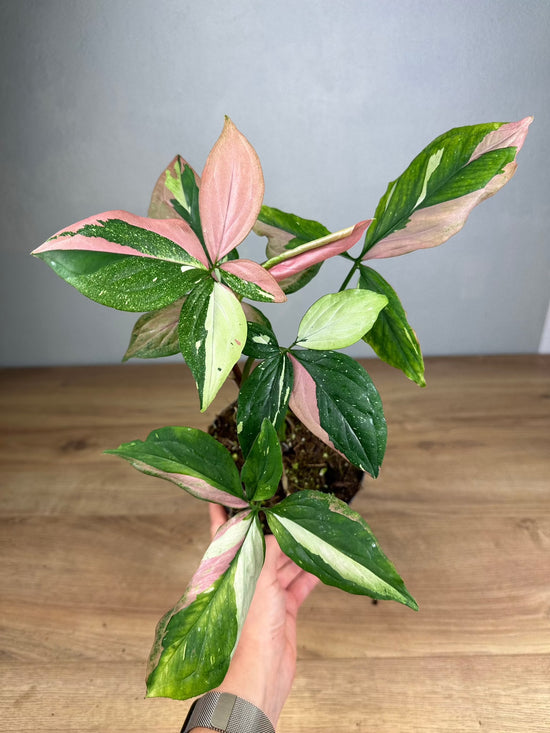 Vendor:Harmony PlantsSyngonium Red Spot Tricolor
- Regular price
-
€20,00 - Regular price
-
- Sale price
-
€20,00
-
Syngonium Aurea Variegata
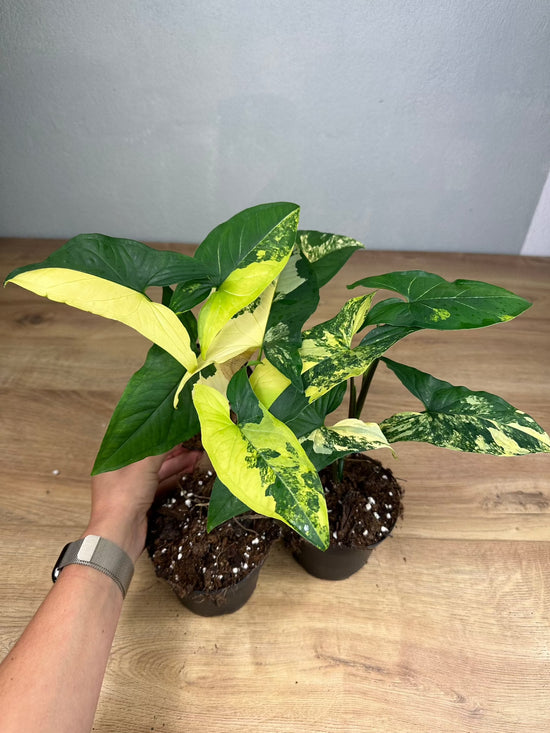 Vendor:Harmony PlantsSyngonium Aurea Variegata
- Regular price
-
€29,00 - Regular price
-
- Sale price
-
€29,00
-
Syngonium Green Splash Gray Ghost
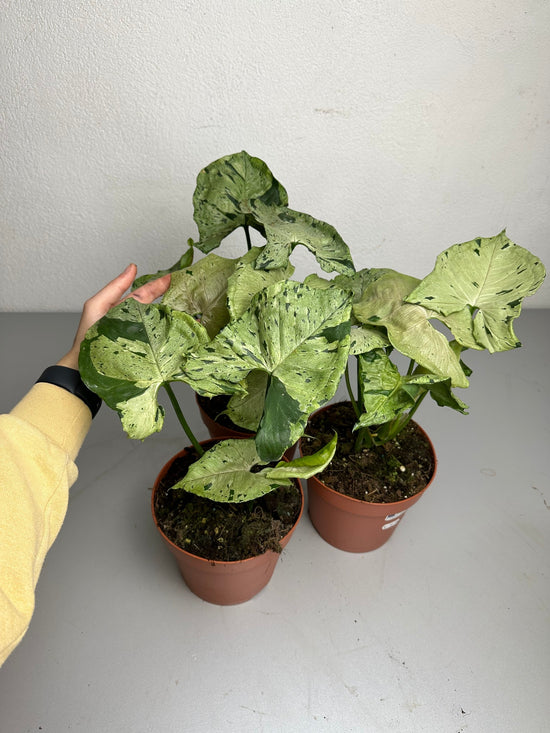 Vendor:Harmony PlantsSyngonium Green Splash Gray Ghost
- Regular price
-
€29,00 - Regular price
-
- Sale price
-
€29,00
-
Syngonium Albo Variegata on Mosstab
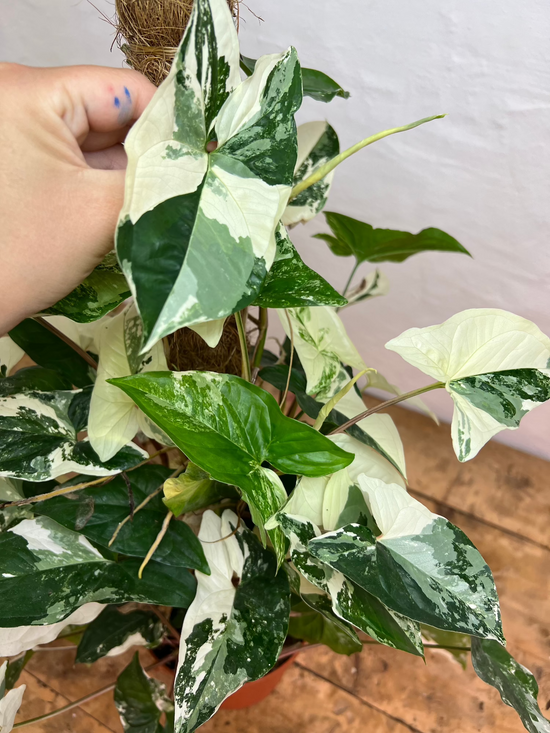 Vendor:Harmony PlantsSyngonium Albo Variegata on Mosstab
- Regular price
-
€45,00 - Regular price
-
- Sale price
-
€45,00
-
Syngonium Albo Variegata
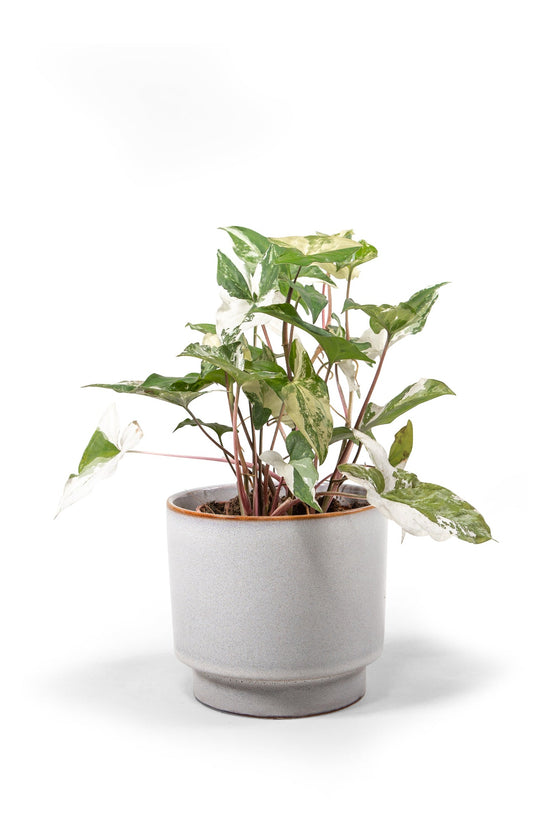 Vendor:Harmony PlantsSyngonium Albo Variegata
- Regular price
-
€35,00 - Regular price
-
- Sale price
-
€35,00
Buy Syngonium & Purple Waffle Plant – direct from the specialist
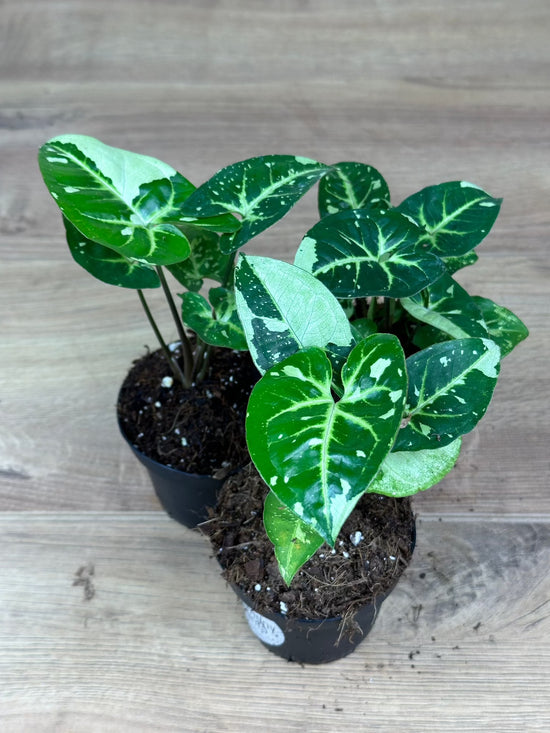
Syngonium, also known as Arrowhead Plant, Arrowhead Vine, or Goosefoot Plant, is one of the most versatile houseplants there is. With its distinctive, arrow-shaped leaves in an impressive variety of cultivars, it brings a tropical flair to any home. At Harmony Plants, you'll find rare and coveted varieties such as the Syngonium Albo Variegata, the Syngonium Aurea Variegata, or the colorful Syngonium Redspot Tricolour, all lovingly grown and safely shipped to your home.
What is a Syngonium? Everything about the Arrowhead Plant
Syngonium (botanically: Syngonium podophyllum) belongs to the arum family (Araceae) and is originally from the tropical rainforests of Central and South America. In its native habitat, the arrowhead plant climbs up tree trunks. As a houseplant, it forms compact, bushy shoots or elegantly climbs up a moss pole. Common names include Purpurtute, Pfeilkraut, and Pfeilpflanze, all references to the characteristic shape of its leaves.
Particularly interesting: Young syngoniums still have simple, heart-shaped leaves. With increasing age, they develop the typical, multi-lobed arrowhead shape. Some varieties also change their coloring, which makes them real eye-catchers.
Syngonium Varieties: An Overview of Our Selection
The genus Syngonium comprises over 30 species and countless cultivars. We offer a hand-picked selection of rare and visually stunning varieties.
- Syngonium Albo Variegata: A classic in the collector's scene: green leaves with creamy-white variegation, each leaf unique.
- Syngonium Aurea Variegata: Rare and sought-after: bright yellow-green accents on rich green.
- Syngonium Redspot Tricolour: A three-color spectacle of green, white, and delicate pink.
- Syngonium Green Splash Grey Ghost: Subtle, silvery pattern on a green background – perfect for minimalist interior styles.
- Syngonium Panda: Compact variety with striking leaf markings, ideal for smaller spaces.
Why a Syngonium Is the Perfect Houseplant
Easy to care for and beginner-friendly
The arrowhead plant tolerates minor care mistakes and is therefore ideal for plant beginners. It doesn't need daily attention; occasional watering, some light, and fertilizer now and then are enough for it to thrive.
Adaptable to various locations
Whether a bright room, partial shade, or a slightly darker office corner: Syngoniums can cope with different light conditions. Important: no direct, scorching midday sun, otherwise the leaves will burn. A bright, indirect location is ideal.
Air-purifying properties
Like many arum plants, Syngonium also helps to improve indoor air quality. In rooms with little air exchange, e.g., offices, bedrooms, bathrooms, this is a real added value.
Versatile in design
Syngoniums can be showcased in many ways: as a hanging basket plant, compactly in a pot on a shelf, or trailing up a moss pole. With the right substrate and a suitable pot, it will grow into a true showpiece.
Syngonium Care
- Location: Bright to partial shade, no direct midday sun
- Watering: Keep substrate slightly moist, avoid waterlogging
- Humidity: At least 40–50%, occasional misting is appreciated
- Fertilizing: April to September every 4–6 weeks with liquid fertilizer
- Repotting: Every 1–2 years in spring, when roots grow out of the pot
- Temperature: 15–26 °C, no drafts and no temperatures below 12 °C
Detailed tips for proper care can be found in our Syngonium Care Guide.
Propagating Syngonium – it's that easy
Arrowhead plant can be easily propagated from cuttings. Ideal for sharing with friends or expanding your own collection. To do this, cut a shoot with at least one leaf and one node (leaf axil). You can either place the cutting in a glass of water until roots are visible (approx. 2–4 weeks), or plant it directly into moist, loose substrate. Both methods work reliably.
Syngonium FAQ
How big does a Syngonium get?
Depending on the variety and care, Syngoniums grown as houseplants reach a height of 30 to 80 cm. On a moss pole, they can grow significantly larger. Regular pruning keeps the plant compact and bushy.
Is Syngonium poisonous to cats, dogs, or children?
Yes. The Syngonium contains calcium oxalate crystals, which can cause irritation upon contact with mucous membranes. Therefore, the plant should be placed out of reach of pets and small children. When pruning, we recommend wearing gloves.
How much light does a Syngonium need?
Syngoniums thrive best in a bright to semi-shady location with indirect light. Direct sunlight, especially at midday, will scorch the delicate leaves. Variegated varieties (such as Albo or Aurea) require a little more light to maintain their colors.
How to propagate a Syngonium?
The easiest way is via cuttings in water or directly in moist substrate. Shoots with at least one node and one leaf reliably root within 2–4 weeks.
What is the difference between Syngonium and Philodendron?
Both belong to the Araceae family and look similar – but: Syngoniums have distinct arrow-shaped leaves and change their leaf shape as they age. Philodendrons, on the other hand, usually retain their typical heart shape. Both are easy to care for and equally loved by collectors.
Is a Syngonium suitable for beginners?
Absolutely. The arrowhead plant is one of the easiest houseplants to care for – it forgives forgotten watering, thrives with little light, and grows without problems under normal living room conditions.
How often should I fertilize my Syngonium?
During the growing season (April to September), fertilize every 4–6 weeks with a balanced liquid fertilizer. In autumn and winter, fertilize every 8 weeks or stop altogether.